
TOBBMUN’27
OUR EVENT
OUR COMMITTEES

JCC: US ELECTIONS
It’s 1960, and America stands at a massive fork in the road. On one side, Kennedy pushes his ambitious “New Frontier”—on the other, Nixon bets big on his Cold War experience. This JCC captures the chaotic birth of modern politics, from raw TV debates and shifting civil rights alliances to high-stakes backroom deals. Every move made in one campaign room immediately impacts the other, turning the entire race into a relentless political chess match for 270 electoral votes. History is up for grabs.
Agenda Item: Open Agenda
Co-Under Secretary General: Ramazan Yandı
Co-Under Secretary General: Efe Erdemir

CC: THE NAPKIN KILLER
In the cold February of 1967, a dead body was found in a forest of a village called Çobanisa. The victim’s face was covered with a bloody napkin. Upon investigation, it was discovered that the blood on the napkin belonged to the victim. Local police believed this murder was committed because of some common reasons, but as the days passed, two more murdering cases occurred. All the victims were found dead in the same way, with a gory napkin covering their faces.
A kind of case was never seen around this village before, not even a single murder had happened. In light of all these murders, the villagers have nicknamed the killer the “NAPKIN KILLER”. They realized that their lives were no longer safe. Not only these murders have plunged everyone into terrified fear but also pushed all of them to ask the same question: Why?
At this point, the local police believe the one behind all these murders is the same killer, a killer who is obsessed with covering their victims’ faces with a napkin.
Hence the police think this killer has no intention of stopping so they are slowly starting to lose their hopes, because of that the weight of protecting the innocent villagers are now on the shoulders of the detectives
The committee is tasked with solving the mystery of who committed these murders and resolving the issues that may arise while investigating the crimes.
Agenda Item: Open Agenda
Under Secretary General: Mehmet Emre Uyanık
Academic Assistant: Aziz Osman Atav
Academic Assistant: Halil Tuna Kuş

KGB
In 1956 when an anti-Soviet popular uprising broke out in Hungary, the Director of the KGB at the time, Ivan Serov, personally traveled to Budapest. Operating in close coordination with the Soviet Army, the KGB is brutally suppressed the Hungarian resistance and arrested key figures of the uprising, most reformist leaders such as Imre Nagy and subsequently executed them.
This committee focuses on the suppression of the Hungarian Revolution, also known as Operation Whirlwind. Delegates will formulate strategic tactics for stopping the revolution and draft a formal final indictment known as Obvinitelnoye Zaklyucheniye. Throughout the crisis, delegates will address specific legal and operational parameters, including the details of the charges, legal qualification under relevant criminal codes, evidence lists, suspect profiles, and the testimony of witnesses and victims.
Committee: Komitet Gosudarstvennoy Bezopasnosti
Agenda Item: Operation Whirlwind (1956 Hungarian Revolution)
Under-Secretary General: Ata Yankı KILINÇ
Academic Assistant: Ceylin Su CİĞER
Academic Assistant: Efe BAYIR

THE TREATY OF UNIT 731
Welcome to The Treaty of Unit 731, Prior to the Second World War, the Japanese Imperial Army quickly became one of the world leaders in the development of both chemical and biological warfare research. This rapid success of warfare research was only explainable by inhumane experiments conducted in Unit 731, and their research into biological warfare which was encouraged to flourish under Emperor Hirohito’s rule. These experiments were akin to the concentration camps in Nazi-Germany.
Near the climax of the Second World War the United States was quick to recognize the experiments whom in conclusion Allied powers, in particular the United States, negligently failed to administer justice against all Japanese war criminals. Worse than that, they deliberately prevented the victims of Unit 731 from seeing justice, as well as stifling academic insight for nearly four decades after the Trial of Japanese war criminals had concluded. Seeing the acts of The United States, The Soviet Union recognized the strategic implications of the States’ decision not conduct further experiments according to Unit 731, instead establish a treaty upon the biological research for the remission of punishment in exchange and for this saw an opportunity to strike a moral blow, convicting Japanese military members themselves besides racing for the biological research for themselves whom would be essential in the cold War.
Agenda Item: The prosecution of the crimes of the Imperial Japanese Army’s Unit 731
Co-Under Secretary General: İlter Kağan Halli
Co-Under Secretary General: Elif Gökçe Yıldız
Academic Assistant: Defne Kaya
H-UNSC
Founded in 1945, the United Nations Security Council (UNSC) is one of the six main organs of the United Nations established under the UN Charter.
UNSC aims to solve issues such as international peace and security as its primary responsibility. The existence of a threat to peace or an act of aggression is determined by the Security Council. The parties to a dispute are called upon to resolve it by peaceful means, and methods or terms of resolution are recommended
As stated in the Charter of the United Nations, the security council has certain powers to carry out peacekeeping operations to ensure peace, security and tranquillity, implement international sanctions, and approve the enactment of military actions. UNSC is the only UN body that issues binding decisions through member states.
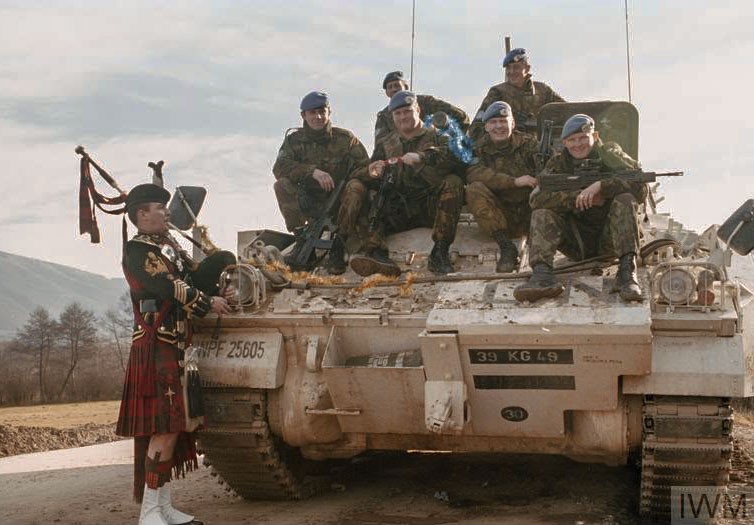
Subsequently to the dissolution of the Socialist Federal Republic of Yugoslavia in the early 1990s, the Balkans became the centre of a series of violent conflicts that challenged the international community’s ability to maintain peace in the Balkans.
Balkans were sieged by widespread violence, ethnic tensions and severe humanitarian consequences. These conflicts raised urgent questions regarding state sovereignty througout Balkans territorial integrity in states and the protection of civilians and responsibilities of the international community in preventing atrocities.
On the contrary to the usual procedure of the UNSC, You will find yourself completely frustrated against the bloody Croat-Bosniak War, where at least hundred thousand people were killed; moreover millions ended up losing their homes.
As the representatives of both factions and UNSC member states, you must decide the fate of the millions who suffer.
Agenda Item: 1992 Croat-Bosniak War
Co-Under Secretary General: Ali Emre ÜZÜLMEZ
Co-Under Secretary General: Bilal Furkan TOKER
Academic Assistant: Kürşad Efe KANTAR

UNDP
The United Nations Development Programme (UNDP) is focused on achieving sustainable development by tackling various global problems which have an effect on human beings and nature. Given the problems of deforestation, depletion of biodiversity and natural resources, ecosystem preservation has turned out to be very significant. This committee will be looking at the way nations can strike a balance between the need for preserving the environment and sustainable development.
Agenda Item: Promoting Environmental Sustainability Through Ecosystem Conservation and Resource Management
Under Secretary General: Bengisu Türksal
Academic Assistant: Ece Erdoğan

UNWOMEN
UN Women (United Nations Entity for Gender Equality and the Empowerment of Women) is a United Nations body established to achieve gender equality globally, and to protect and advance the rights of women and girls. UN Women supports the growth of girls in safe, fair, and equal conditions, and plays a leading role within the international community in addressing rights violations while also working to combat gender-based violence. The agenda for this committee focuses on combating pedophilia, the sexual abuse of children, and the systemic exploitation of minors. Representing a global crisis in terms of children’s rights and human dignity, this issue, specifically the concept of pedophilia and the severe devastation caused by this mindset, serves as the primary focus. Pedophilia is not merely an individual perversion or an isolated crime; it is a global threat of abuse that targets children’s bodies and spirits, fueled by international human trafficking networks and unregulated digital platforms. The committee aims to identify the legal, social, and technological loopholes that facilitate pedophilia and child abuse, to dismantle the culture of impunity, and to establish sustainable mechanisms to protect children from these threats. In this regard, delegates are expected to reflect the child protection policies and laws of the countries they represent, while remaining mindful of the sensitivity and gravity of the subject matter. Delegates are expected to carry out a detailed investigation into the legal gaps, digital security threats and human trafficking networks that facilitate child exploitation and pedophilia and make concrete recommendations to protect children in physical and digital environments. Besides, they will also have to work with representatives of other countries for a consensus and draft a feasible resolution paper, aiming to provide psychological and legal support to victims and enhance cooperation among international law enforcement agencies.
Agenda Item: Addressing pedophilia, child sexual abuse, and the systemic exploitation of minors.
Co-Under Secretary General: Çağın Orkan Benzeş
Co-Under Secretary General: Esmanur Çapraz

WWF
Founded in 1961, the World Wildlife Fund (WWF) is an independent conservation organization dedicated to safeguarding biodiversity and reducing environmental damage. Its mission includes encouraging sustainable resource use and limiting pollution and excessive consumption.
In this committee, delegates are expected to examine how urban development can accommodate human needs without damaging wildlife while considering possible cooperations between local authorities, businesses, and communities for the purpose of including wildlife safeguarding actions in further development of cities.
In this committee, delegates are expected to examine how urban development can accommodate human needs without damaging wildlife while considering possible cooperations between local authorities, businesses, and communities for the purpose of including wildlife safeguarding actions in further development of cities.
Agenda Item: Addressing the Impacts of Urban Development on Wildlife and Habitats
Under Secretary General: Günel Ceritoğlu
Academic Assistant: Bilgin Uzunlu